
Finwaver.com
Your school or business runs better on finwaver.com. Sign up for free one (1) week try.
PAPER 1
(40 marks)
45 minutes
1.
Hand trowel is used in farming to
level soil surface.
remove weeds.
turn manure during compost making
transplant seedlings.
2.
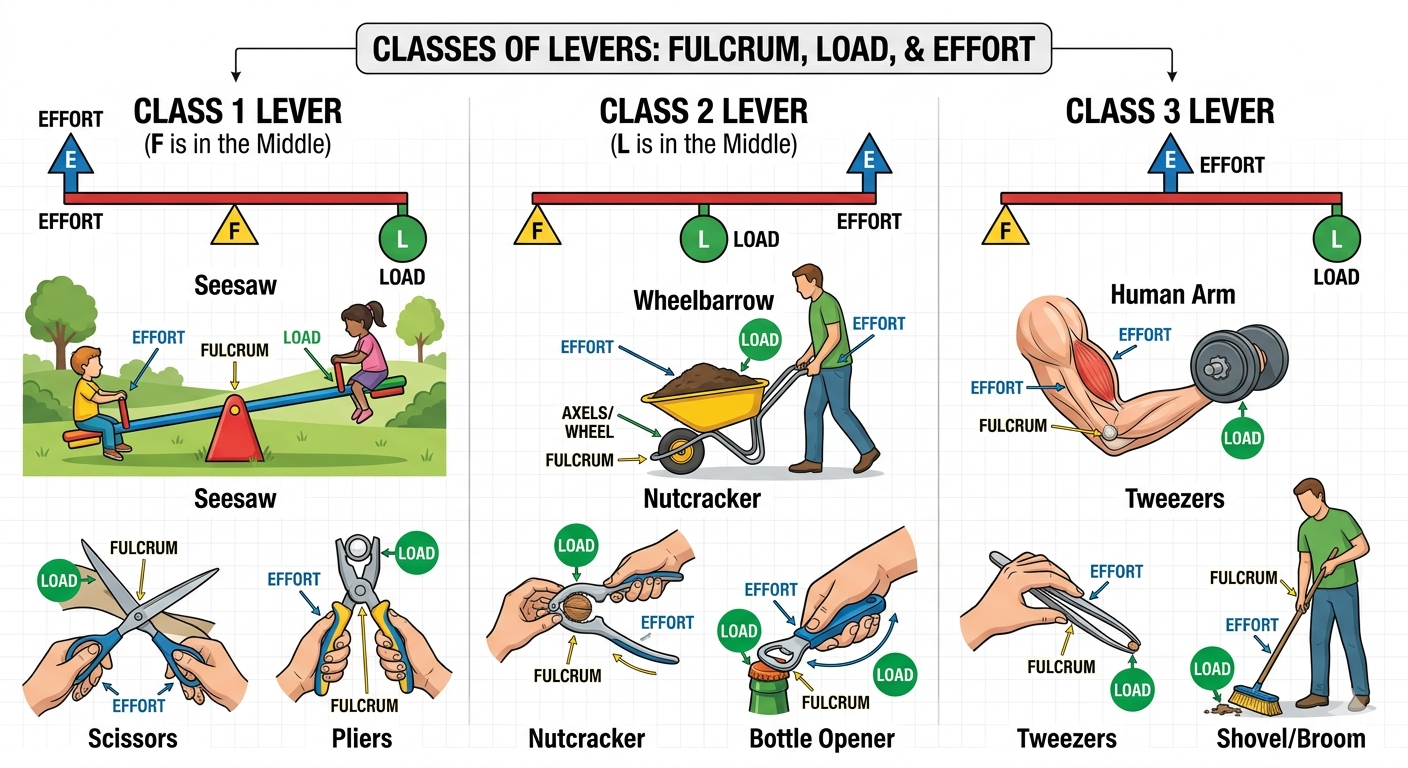
An example of a simple lever which has its effort at the centre is
a bottle opener.
a pair of scissors.
the beam balance.
a pair of forceps.
3.
Which of the following practices is not a cultural practice in crop production?
Nursing
Pest control
Weeding
Mulching
4.
The most suitable tool for transplanting vegetable seedlings is the
hoe.
cutlass.
hand trowel.
hand fork.
5.
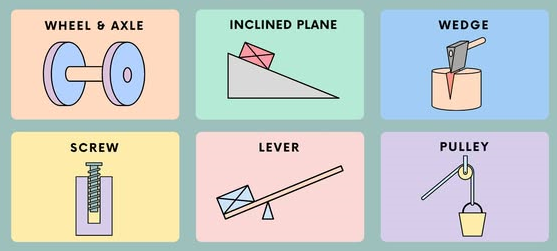
An example of an inclined plane is a
flat road surface.
see-saw.
pulley.
path of a hill.
6.
Which of the following statements about noble gases is correct? They are
charged gases.
monoatomic molecules.
very reactive.
diatomic molecules.
7.
Oxygen gas is represented by the chemical symbol O2. This symbol represents two
molecules of oxygen.
atoms of oxygen.
ions of oxygen.
elements of oxygen.
8.
Mosquitoes cannot breed in a
pool.
swamp.
pond.
river.
9.
The transistor in an electronic device is used
I. as a switch
II. for amplifying alternating signals
III. in preventing overheating in electric irons
I only
I and II only
I, II and III
I and III only
10.
The bottom of a pool of water appears closer to the surface than it is. Which of the following properties accounts for this observation?
Reflection
Transparency of water
Rectilinear propagation
Refraction
11.
The force that results when a comb is rubbed through dry hair is
magnetic force.
frictional force.
gravitational force.
electrostatic force.
12.
Which of the following types of human teeth is used for biting food?
Incisors
Canines
Molars
Premolars
13.
The gas evolved when a small piece of sodium is dropped into a beaker containing water is
carbon dioxide.
hydrogen.
chlorine.
oxygen.
14.
A student who was accidentally trapped in a cupboard died because
only nitrogen was left in the cupboard.
the greater part of oxygen in the cupboard was used up.
carbon dioxide run short in the cupboard.
all the air in the cupboard was used up.
15.
The energy transformation that takes place in electric pressing iron is
electrical energy → potential energy.
electrical energy → sound energy.
electrical energy → chemical energy.
electrical energy → heat energy.
16.
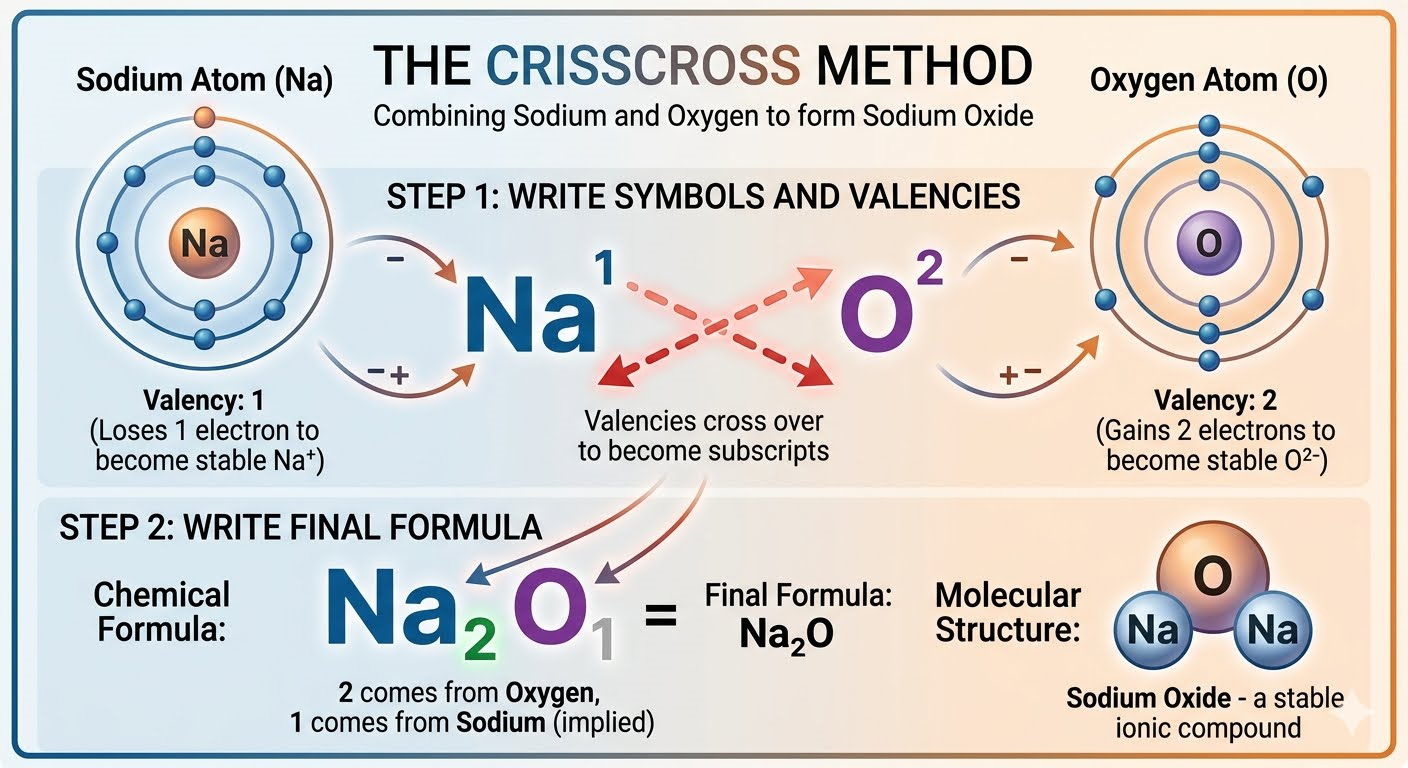
The combining powers of sodium and oxygen atoms are 1 and 2 respectively. The chemical formula of a stable compound formed between them is ......
NaO
Na2O
NaO2
Na2O2
17.
Which of the following methods are used in making magnets?
I. Induction
II. Stroking
III. Hitting
I and II only
I and III only
I, II and III
II and III only
18.
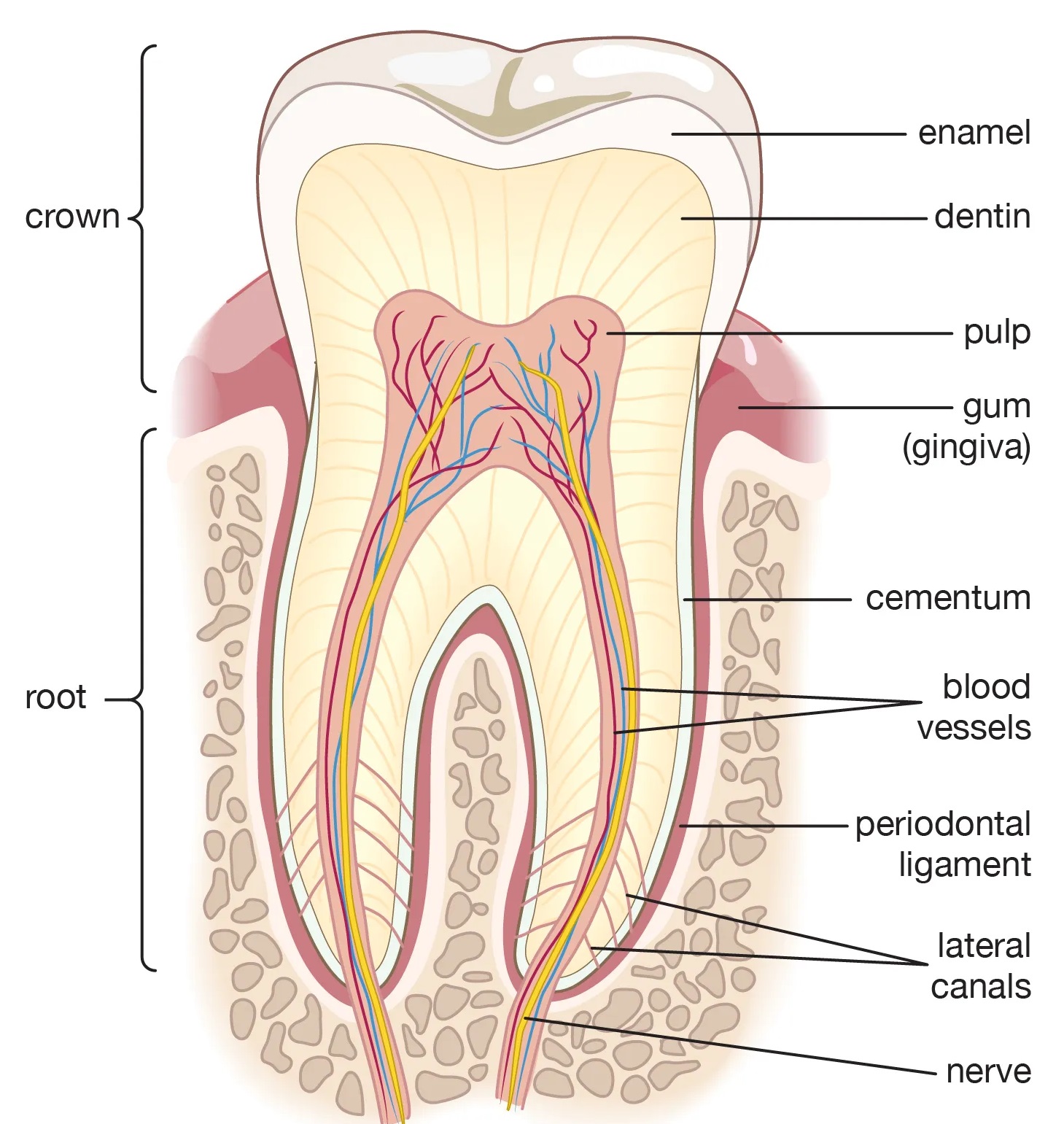
The hardest part of the tooth is the
enamel.
dentine.
cement.
pulp.
19.
Which of the following substances contains natural acid?
Vinegar
Wood ash
Saliva
Bile
20.
The chemical component of milk of magnesia is
calcium hydroxide.
potassium hydroxide.
sodium hydroxide.
magnesium hydroxide.
21.
Which of the following foods contains the greatest amount of protein?
Cheese
Plantain
Mushroom
Yam
22.
Two atoms of the same element with symbols 612 X and 614 X differ by their
electron numbers.
proton numbers.
atomic numbers.
neutron numbers.
23.
The force that opposes motion is
magnetic force.
frictional force.
gravitational force.
electrostatic force.
24.
In order to maintain soil fertility, a farmer should not practice
crop rotation.
continuous cropping.
consistent manuring.
fertilizer application.
25.
The ways of conserving electrical energy include
I. putting off electrical appliances when not in use
II. ironing clothes one at a time
III. ironing clothes in bulk
I only
II only
I and III only
I and II only
26.
In which of the following systems does the farmer rely on animals in case of crop failure?
Crop rotation
Mixed farming
Organic farming
Mixed cropping
27.
The recommended floor space per bird in a poultry house is 0.6 m2.
Determine the number of layers that would occupy a poultry house of an area of 72 m2.
40
72
300
120
28.
What is formed when the path of light rays is blocked by an opaque object?
Echo
Shadow
Penumbra
Umbra
29.
Green plants have the ability to make their own food hence they are known as
producers.
parasites.
decomposers.
consumers.
30.
Which of the following human activities maintains the balance of nature?
Pollution
Deforestation
Afforestation
Mining
31.
Which of the following methods could conserve soil water on a farm?
I. Adequate spacing
II. Disease control
III. Cover cropping
I and II only
I and III only
I, II and III
II and III only
32.
Which of the following planets are closer to the sun than the earth?
Venus and Mars
Venus and Mercury
Venus and Saturn
Mercury and Mars
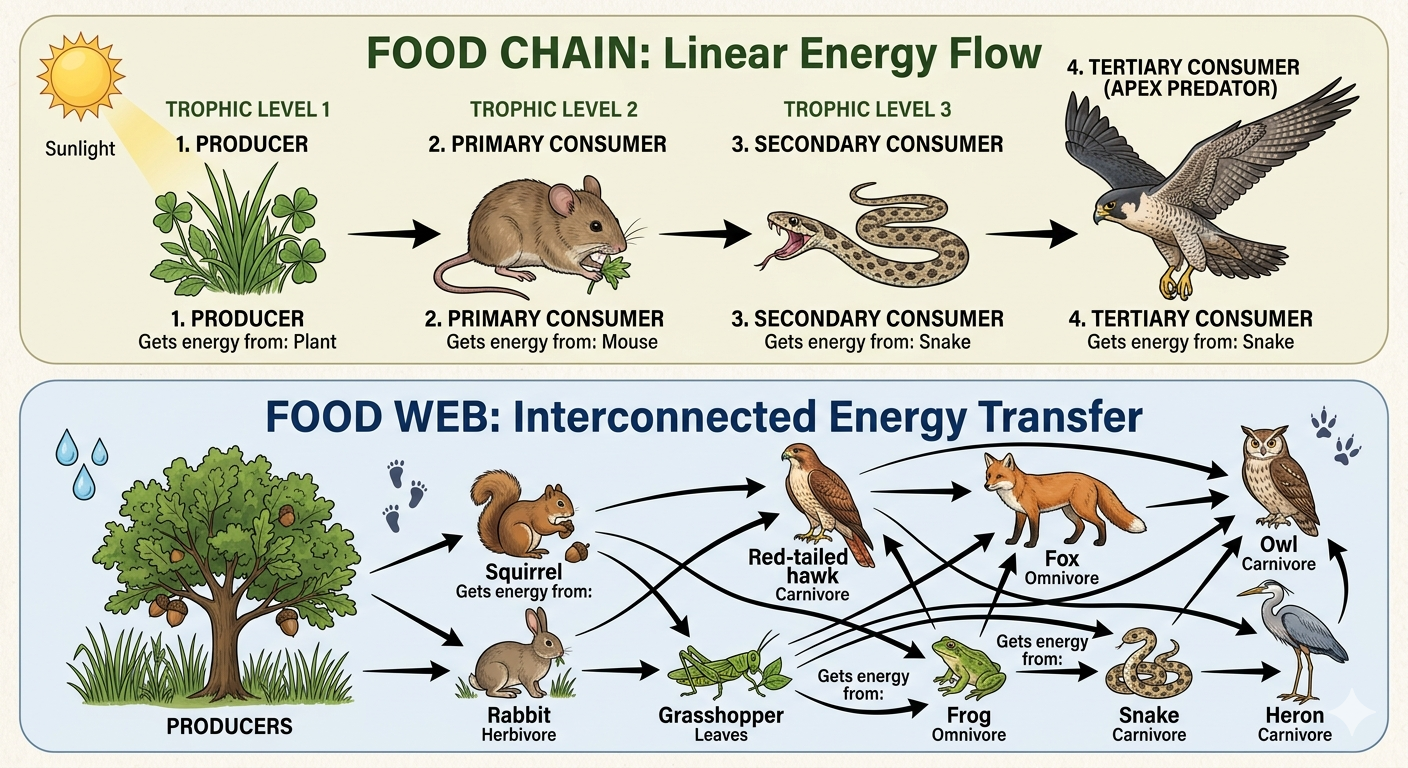
Use the information on the simple food chain below to answer question 33.
Cassava → Rat → Snake → Hawk
33.
The primary consumer is the
cassava.
rat.
hawk.
snake.
34.
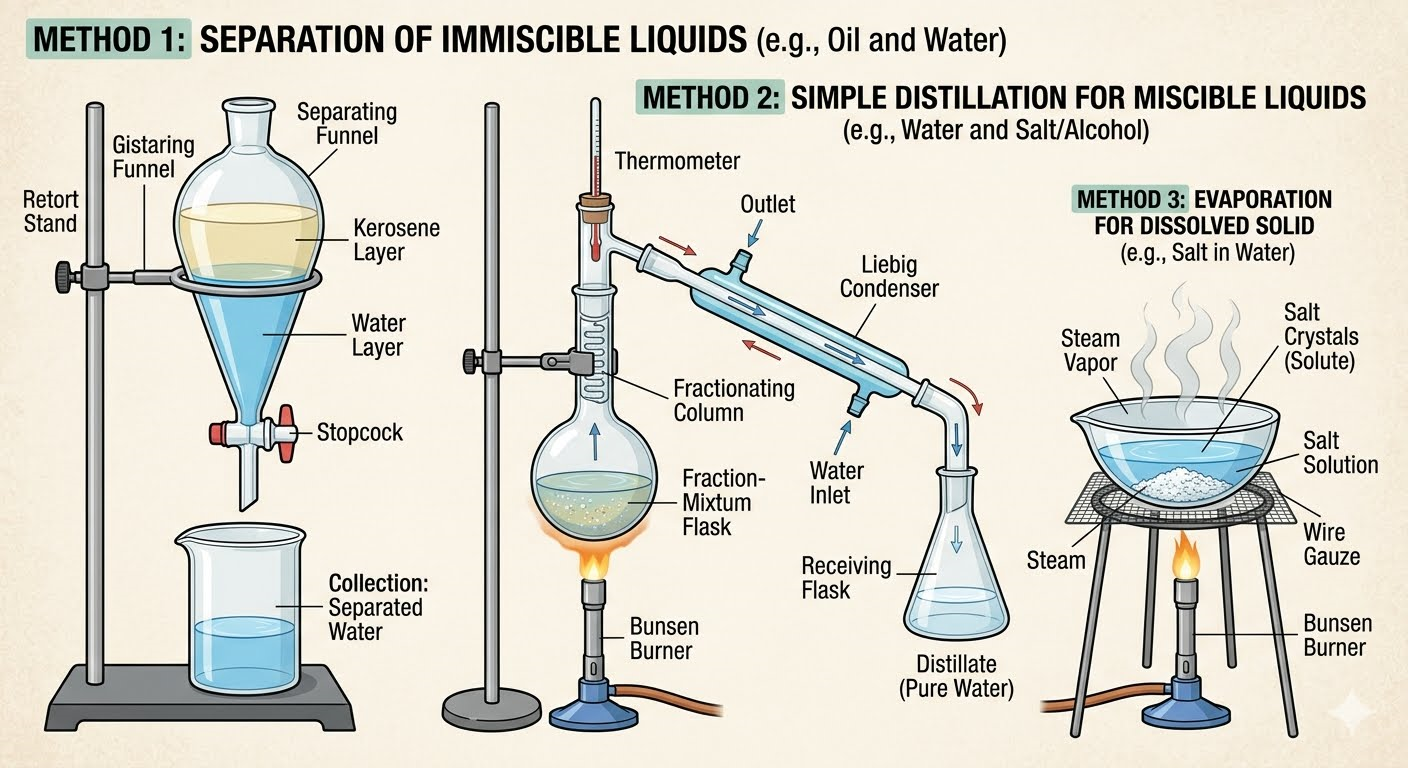
The appropriate apparatus for the separation of a mixture of water and kerosene is
separating funnel.
filter funnel.
condenser.
evaporating dish.
35.
A hazardous substance that may be emitted from car exhaust fumes is ......
CO2
CO
H2
H2O
36.
The best method of preventing teenage pregnancy is to
use a pill.
avoid having sex.
practise safe sex.
have only one sexual partner.
37.
The linear sequence of feeding relationship among living things is called
food web.
food chain.
producer.
ecology.
38.
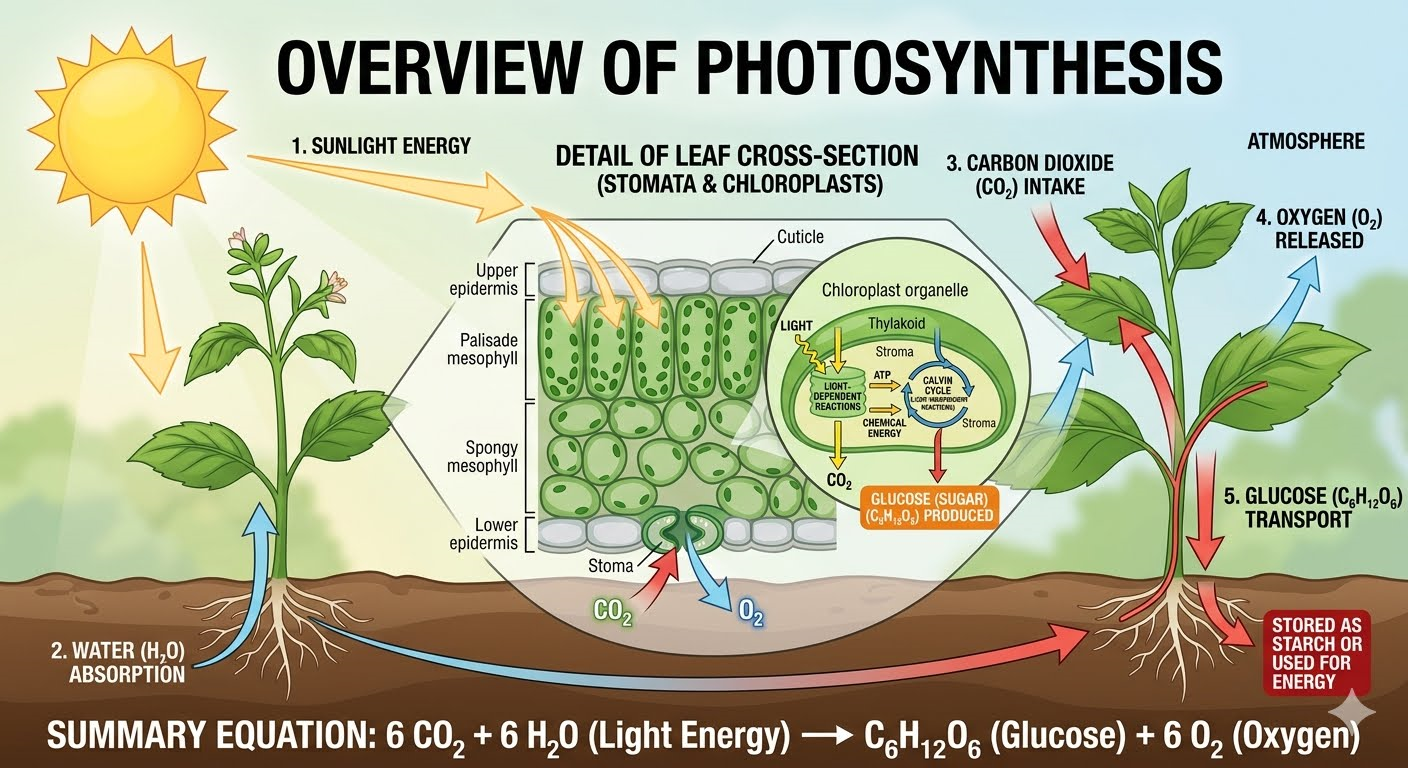
Which of the following statements about photosynthesis is correct?
It occurs in the presence of light energy.
Oxygen is the main product.
Plants obtain water from the atmosphere to make food.
Leaves without chlorophyll are able to photosynthesize.
39.
The stage of development between childhood and adulthood in humans is known as
adolescence.
infancy.
teenage.
puberty.
40.
Which of the following statements is true of anions? They contain
more protons than neutrons.
more protons than electrons.
the same number of protons and neutrons.
less protons than electrons.
PAPER 2
ESSAY
1 hour 25 minutes
[100 marks]
Answer all the questions in your answer booklet.
This paper is in two sections: A and B. Answer Question 1 in Section A and any other three questions in Section B.
Credit will be given for clarity of expression and orderly presentation of material.
SECTION A
[40 marks]
Answer all the questions in this section.
(a)
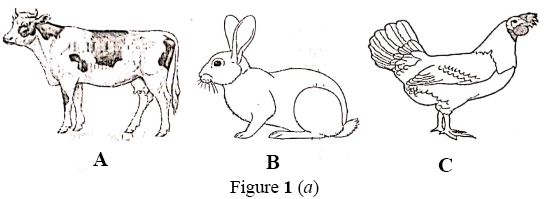
Figure 1 (a) is an illustration of three types of domestic farm animals.
Study the figure carefully and answer the questions that follow.
(i)
Mention one type of feed given to each of the animals labelled A, B and C.
(ii)
Name one nutrient each from the types of feed mentioned in (i).
(iii)
Give one function each of the nutrient named in (ii).
(iv)
Which of the animals in Fig. 1(a) can be classified as a ruminant?
[10 marks]
(b)
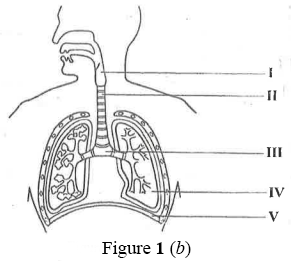
Figure 1(b) is an illustration of the respiratory system of humans.
Study the figure carefully and answer the questions that follow.
(i)
Name the parts labelled I, II, III, IV and V.
(ii)
Give one function each of the parts labelled II, III and V.
(iii)
Name the most important gas during the process of respiration that is:
(α)
used by the body;
(β)
brought out from the body.
[10 marks]
(c)
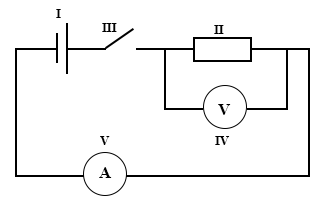
The diagrams below are illustrations of circuit symbols of electric components used to investigate the relationship between potential difference and electric current.
Study the diagrams carefully and answer the questions that follow.
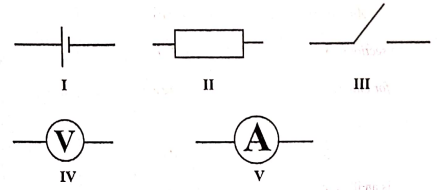
(i)
Name the symbols labelled II, III and IV.
(ii)
Draw a circuit diagram using all the symbols labelled I, II, III, IV and V.
(iii)
If the circuit is closed and V reads 5 units with IV reading 15 units, determine the value of II in S.I. units.
[10 marks]
(d)
A number of acid, base and salt solutions of different pH values were prepared in test tubes labelled A, B, C, D and E.
The table below shows the pH and the corresponding colours of each solution on addition of three drops of universal indicator.
| Solution | Content | pH of solution | Colour of universal indicator |
| A | 0.1 mol dm-3 HCl | - | Red |
| B | 0.1 mol dm-3 CH3COOH | 5 | Orange |
| C | 0.1 mol dm-3 NaCl | - | - |
| D | 0.1 mol dm-3 NH3 | 9 | Blue |
| E | 0.1 mol dm-3 NaOH | - | Violet |
(i)
Identify the solution that would have a pH value equal to:
(α)
7;
(β)
14.
(ii)
Identify the solution that can be classified as a/an:
(α)
strong acid;
(β)
neutral;
(γ)
weak base.
(iii)
Suggest the pH value of solution A.
(iv)
Identify two solutions in the table that will react to form salt and water.
(v)
What would be the colour of solution C upon addition of drops of universal indicator?
[10 marks]
SECTION B
[60 marks]
Answer three questions only from this section.
(a)
Give two examples of each of the following types of diseases of humans:
(i)
Fungal disease;
(ii)
Deficiency disease;
(iii)
Non-communicable disease.
[6 marks]
(b)
Explain the following terms:
(i)
Homogeneous mixture;
(ii)
Heterogeneous mixture.
[4 marks]
(c)
(i)
Explain briefly why dragging an object on a smooth surface is easier than a rough surface.
[3 marks]
(ii)
Name the S.I. unit of
(α)
force,
(β)
work.
[5 marks]
(d)
(i)
What is a balanced ration in poultry feed?
(ii)
Give three effects of malnutrition in poultry.
[5 marks]
(a)
(i)
A simple electric circuit is made up of a cell, resistor and a bulb.
State the observation that will be made when the number of
(α)
cells is doubled,
(β)
bulbs is doubled.
(ii)
Explain the observations stated in (i).
[4 marks]
(b)
Explain briefly how the following factors affect vegetable crop production:
(i)
soil type;
(ii)
nearness to source of water;
(iii)
nearness to market.
[6 marks]
(c)
Explain briefly the following interactions in an ecosystem:
(i)
Mutualism;
(ii)
Commensalism.
[4 marks]
(d)
(i)
Distinguish between the following chemical substances:
(α)
Element and compound;
(β)
Molecule and ion.
(ii)
Write the chemical formula of each of the following binary compounds:
(α)
Aluminium fluoride;
(β)
Ammonia.
[6 marks]
(a)
Name two
(i)
micro-nutrients of plants,
(ii)
macro-nutrients of plants.
[4 marks]
(b)
Name the component of the circulatory system that performs each of the following functions:
(i)
transport of nutrients;
(ii)
protection of the body against infection;
(iii)
temperature regulation.
[3 marks]
(c)
State three effects of poor waste management on human health.
[3 marks]
(d)
(i)
Differentiate between a colloid and a suspension.
(ii)
Classify the following mixtures as solution, colloid or suspension:
(α)
Groundnut paste and water;
(β)
Milk and water;
(γ)
Sugar and water.
[5 marks]
(e)
(i)
What is work output?
(ii)
Explain how work output affects the efficiency of a machine if work input is fixed.
[5 marks]
(a)
(i)
An atom of an element is represented as 817X
Determine the number of
(α)
Protons,
(β)
Electrons,
(γ)
Neutrons.
(ii)
State the position of the element X in (i) on the periodic table in terms of
(α)
Group,
(β)
Period.
[5 marks]
(b)
(i)
Explain briefly heat transfer by conduction.
(ii)
Name two other methods of heat transfer.
[5 marks]
(c)
(i)
Give two examples of water bodies.
(ii)
State two practices of humans that destroy water bodies.
(iii)
State two methods of conserving water bodies.
[6 marks]
(d)
(i)
State three ways by which bacterial diseases are managed.
(ii)
Give an example of a bacterial disease.
[4 marks]


Digital Address: GZ-033-0057
King Kotey Road
Teshie - Accra
Ghana
+233 54 753 9118
info@kuulchat.com

© Copyright 2015 - 2026
All Rights Reserved