1.
The earth rotates on its axis every
12 hours
24 hours
36 hours
48 hours
2.
The ratio between measurement on a map and the actual corresponding distance on the ground is
a longitude
a scale
a latitude
an isotherm
3.
The instrument for measuring atmospheric pressure is called
rain gauge
thermometer
an anemometer
barometer
4.
Which of the following is not an imaginary line drawn on maps?
Axis
Equator
Latitude
Longitude
5.
The conventional sign ∆ drawn on topographical maps stands for
survey beacon
boundary pillar
wireless station
camp site
6.
A long narrow depression with a downward slope on the earth‟s surface is called
an inselberg
sand dune
valley
a ridge
7.
The following are continents in the world except
Africa
Canada
Europe
Australia
8.
The capital of the Upper East Region is
Bolgatanga
Tamale
Wa
Bawku
9.
The highest annual rainfall in Ghana is recorded at
Accra
Kumasi
Sunyani
Navrongo
10.
In which of the following regions in Ghana is Lake Bosomtwi located?
Brong Ahafo
Eastern
Central
Ashanti
11.
Nsuta in Ghana is noted for the mining of
diamond
manganese
bauxite
salt
12.
The language spoken by the largest group of people in Ghana is
Hausa
Ewe
Akan
Guan
13.
14.
Which of the following is a primary occupation?
Fishing
Teaching
Carpentry
Trading
15.
Golden jubilee is celebrated at every
10 years
15 years
25 years
50 years
16.
Which of the following West African countries is the leading producer of phosphate?
Ghana
La Cote d‟Ivoire
Nigeria
Liberia
17.
The first castle built in Ghana in 1482 was in
Cape Coast
Accra
Axim
Anomabo
18.
The Jos plateau in Nigeria is noted for the production of
Gold
Bauxite
Tin
Diamond
19.
The Meteorological Services Department deals with
water
star
power
minerals
20.
Electricity from Ghana is exported to
Gabon
Togo
Nigeria
Liberia
21.
The Fulanis are noted for
lumbering
herding
trading
fishing
22.
The Sagrenti War of 1874 was fought between the
Fantes and Asantes
British and Fantes
Akyems and Asantes
British and Asantes
23.
Yaa Asantewaa, who led the Asante army to war in 1901, was the queenmother of
Kumasi
Kromantsi
Ejisu
Juaben
24.
The first capital town to be built by the Asantes was
Kumawu
Kumasi
Kokofu
Nsuta
25.
Who was the first person to represent the British government in the Gold Coast?
Captain George Maclean
Commander Hill
Sir Gordon Guggisberg
Sir Charles McCarthy
26.
Who was the chairman of the United Gold Coast Convention (UGCC)
George Grant
Dr JB Danquah
Ako Adjei
EA Akuffo-Addo
27.
The capital of the ancient Ghana Empire was
Walata
Kumbi-Saleh
Gao
Jeriba
28.
29.
The Organization of African Unity is made up of only
independent African states
dependent African states
colonized African states
warring African states
30.
The Mediterranean lands are well known for the production of
minerals
textiles
citrus
metals
31.
32.
How many countries form the Economic Community of West African States (ECOWAS)
Ten
Fourteen
Sixteen
Twenty
33.
Which of the following countries is not a member of the Economics Community of West African States?
Guinea Bissau
Mali
Mauritania
Cameroon
34.
Commonwealth Day falls on
12th March
1st May
1st July
24th October
35.
Bauxite is the raw material for the production of
brass
steel
aluminium
bronze
36.
Who was the first chairman of the Organization of African Unity (OAU)
Ahmed Sekou Toure
Jomo Kenyatta
Dr Kwame Nkrumah
Nnamdi Azikiwe
37.
The headquarters of the World Health Organization is at
Addis Ababa
Geneva
Washington DC
New York
38.
The system of apartheid was practiced in
Ireland
Congo
Korea
South-Africa
39.
In which year was Nelson Mandela released from prison?
1970
1979
1980
1989
40.
The factions in the Liberia civil war signed the Bamako Peace Accord in
July 1990
August 1990
October 1990
November 1990
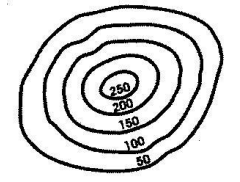
Describe any four methods used for showing relief features on maps.
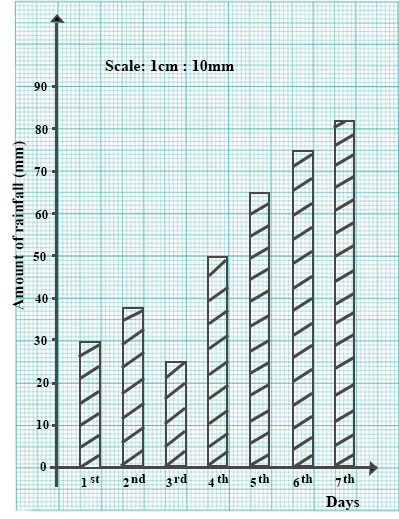
The figures below represent the amount of rainfall recorded in a village from 1st to 7th September 1989
| September | 1st | 2nd | 3rd | 4th | 5th | 6th | 7th |
| Amount of rainfall (mm) | 30 | 38 | 25 | 50 | 65 | 75 | 82 |
a)
Using a graph paper and a suitable scale draw a bar graph to illustrate the figures.
b)
On which day was the highest amount of rainfall recorded?
c)
What was the lowest amount of rainfall recorded?
d)
Name the instrument used for recording rainfall.
What would you consider as four main benefits of the Junior Secondary School Education?
a)
Identify five important types of timber found in the forest of Ghana
b)
Mention five uses of timber.
a)
What are the four major problems related to cattle rearing in Africa?
b)
Suggest solutions to any two of these problems.
What are four effects of wars in the world?


Digital Address: GZ-033-0057
King Kotey Road
Teshie - Accra
Ghana
+233 54 753 9118
info@kuulchat.com

© Copyright 2015 - 2026
All Rights Reserved