Consider the given elements: 37 X and 920 Y
i)
Write the electronic configuration for Y;
ii)
State the possible ion that could be formed by X to make it more stable.
i)
Mention the three sub-atomic particles.
ii)
State the relative charge on each of the three sub-atomic particles mentioned in (d) (i) above.
iii)
Name the particle formed when an atom loses an electron.
i)
What is an element?
ii)
Write down the symbol of each of the following chemical substances:
α)
Potassium;
β)
Sulphur.
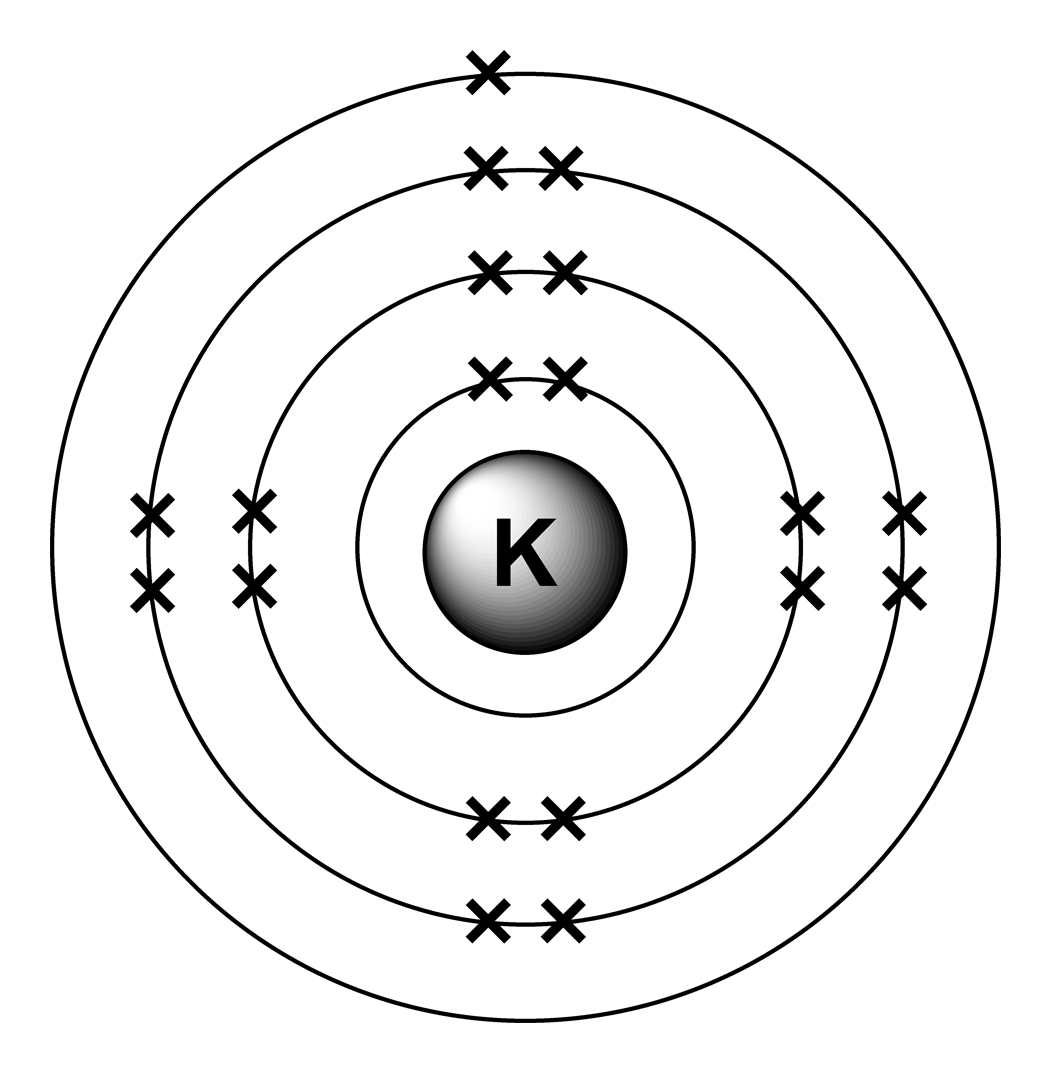
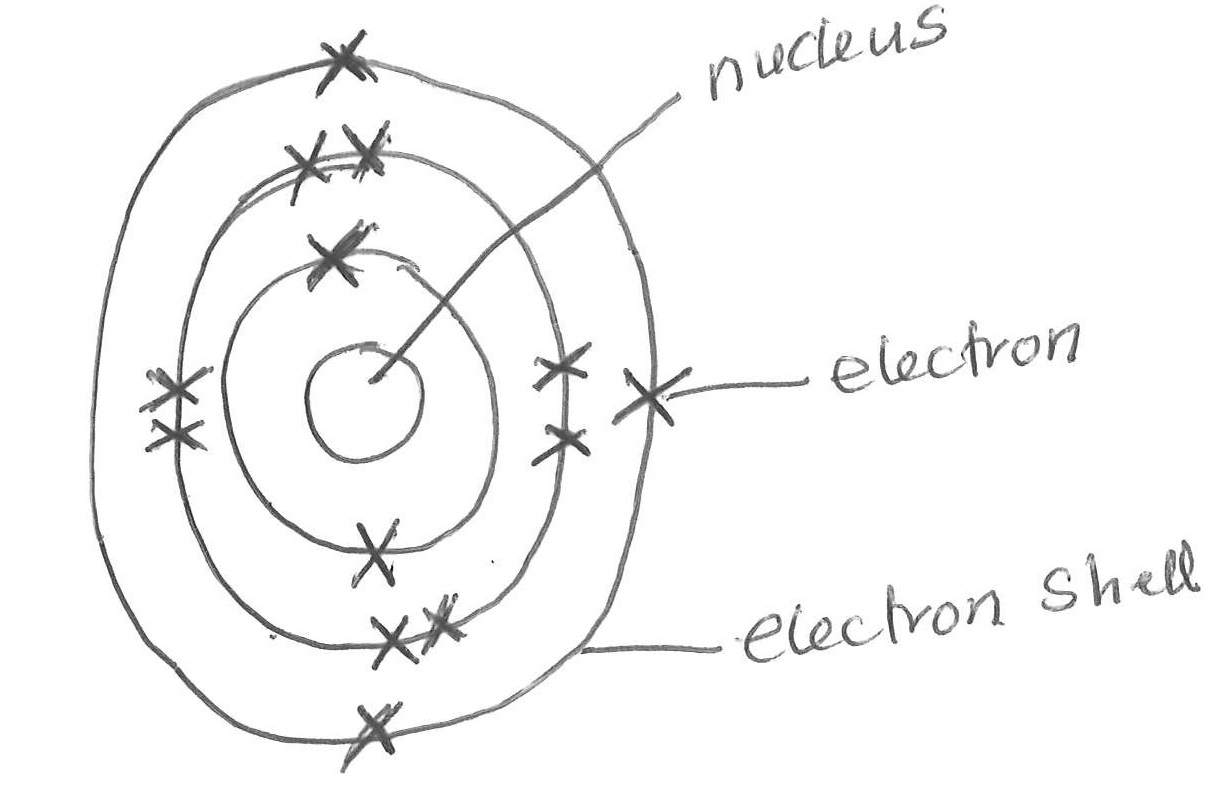
Draw the electronic structure of potassium
[Atomic number of potassium = 19]
(i)
What is an atom?
(ii)
Name the components of an atom which determines each of the following quantities.
(α)
mass of an atom
(β)
charge of an atom
(iii)
Why is an atom electrically neutral?
Name two different particles of matter which carry
(i)
a negative charge;
(ii)
a positive charge;
(iii)
no charge.
Give two examples of an element
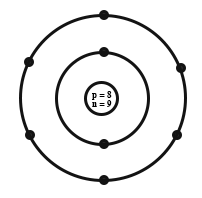
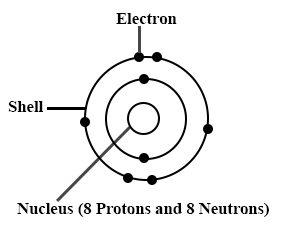
An atom has eight protons and nine neutrons.
(i)
Draw the atomic structure of the atom.
(ii)
If the atom gains two extra electrons what will be the charge of the ion formed? (Show working)
Explain why atoms are electrically neutral.
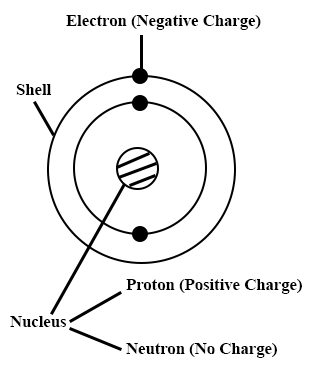
Draw and label the structure of an atom containing three electrons. Indicate the charges of the particles.
i)
Define valency
ii)
State the valencies of the following elements and radicals:
α)
Iron
β)
Zinc
γ)
Hydroxyl
λ)
Carbonate
List the particles that make up an atom.
What is an anion?
i)
What is an element?
ii)
Classify each of the following substances as an element, compound or mixture:Water, air, potassium, alcohol, common salt, sugar
(i)
What is an ion
(ii)
Give two examples of ions
An atom has three protons and three neutrons.
(i)
How many electrons are there in this atom?
(ii)
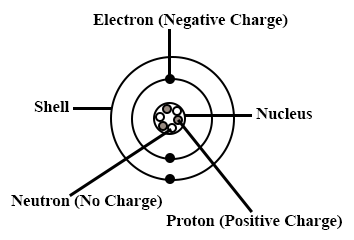
Draw a labeled diagram to show the arrangement of all the particles in the atom.
(a)
An atom has an atomic number of 8 and a mass number of 16. State the number of each of the following in the atom:
(i)
Protons
(ii)
Electrons
(iii)
Neutrons
(b)
(i)
Draw the structure of the atom in (a) above
(ii)
If the atom in (a) above gains two electrons what will be the charge of the ion?
(i)
Describe how ions are formed from atoms
(ii)
State two differences between a proton and an electron
(iii)
Write the chemical symbol for each of the following:
α)
an atom of Lithium
β)
a molecule of chlorine
γ)
an atom of oxygen
Give the chemical symbols of the following elements
(i)
Oxygen
(ii)
Chlorine
(iii)
Aluminium
(iv)
Calcium
An atom has 13 protons and 14 neutrons:
(i)
draw and label the structure of the atom.
(ii)
State its valency.
(a)
Define the term element and give one example of it
(b)
List the parts of an atom and show the electrical charges of each of the parts.
An atom Y has atomic number 12. It loses two electrons in order to be stable.
i)
State the proton number of the atom before it loses electrons.
ii)
State the electron number of the atom:
α)
before it loses electrons.
β)
after losing electrons.
iii)
Name the type of ion formed by the atom when it loses two electrons.


Digital Address: GZ-033-0057
King Kotey Road
Teshie - Accra
Ghana
+233 54 753 9118
info@kuulchat.com

© Copyright 2015 - 2026
All Rights Reserved