1.
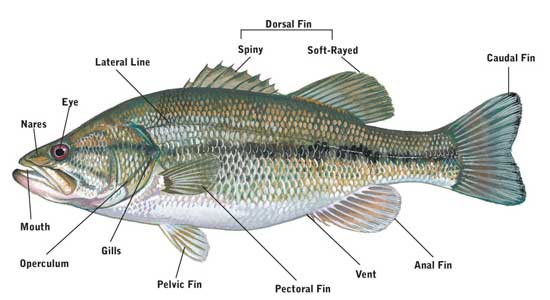
The organ which enables a fish to breathe in water is the
Nostril
Pectoral fin
Dorsal fin
Gall bladder
2.
The paired fins in fishes are used for
protection and diving
diving and balancing
balancing and control
steering and diving
3.
Which of the following processes could be used to preserve fish for a long time?
Boiling only
Salting only
Sun drying only
Boiling and sun drying
4.
Which pf the following organs is used by the fish for movement?
Eye
Fin
Gill
Tail
5.
The figure below is a diagram of a fish.
Use it to answer the question below.
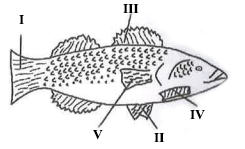
The function of the part labelled IV is to enable the fish to
sink in water.
absorb oxygen from the water.
protect itself from attack.
detect smell in water.
6.
The figure below is a diagram of a fish.
Use it to answer the question below.
The part labelled V is used for
balancing.
steering.
surfacing.
paddling.
7.
The structure which helps a fish to breath under water is the
gill.
air sac.
operculum.
mouth.
8.
The fish is protected from injury by the
fins.
gills.
operculum.
scales.
9.
Fishponds are often stocked using
anchovies.
fingerlings.
fish eggs.
frys.
10.
Which of the following methods is/are used for preserving fish?
I. Canning
II. Frying
III. Smoking
I only
I and II only
II and III only
I, II and III
11.
The parts of a bony fish that are used to control the level at which the fish swims are known as
dorsal and caudal fins.
caudal and pectoral fins.
pectoral and pelvic fins.
dorsal and pectoral fins.
12.
Which of the following activities are involved in the rearing of tilapia?
I. Feeding of fish
II. Pond stocking
III. Pest control
I and II only
I and III only
II and III only
I, II and III


Digital Address: GZ-033-0057
King Kotey Road
Teshie - Accra
Ghana
+233 54 753 9118
info@kuulchat.com

© Copyright 2015 - 2026
All Rights Reserved