1.
Which of the following statements about pressure in liquids is/are correct?
I. Pressure in liquids at the same level acts equally in all directions.
II. Pressure in liquids depend on the area of the liquid.
III. Pressure in liquids decreases with depth.
I only
II only
I and III only
I, II and III
2.
What force makes a ripe mango fall from a tree?
Force of tension
Magnetic force
Electrostatic force
Gravitational force
3.
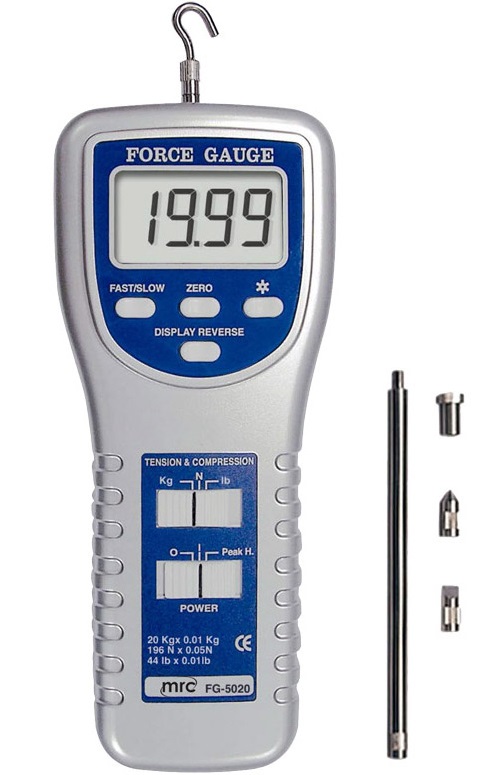
A force meter measures
mass.
temperature.
weight.
work.
4.
Which of the following statements about a force are correct? It
I. is measured in newtons.
II. is measured in newton-metre.
III. can start a motion.
IV. can change the direction of a moving body.
I and II only
I and III only
I, III and IV only
I, II, III and IV
5.
Kerosene is poured on the surface of a pond in order to
make it unsafe for human consumption
make it safe for animal consumption
increase the surface tension
break the surface tension
6.
The pressure in fluids
acts differently in all directions
acts upwards at any point
decreases with depth
increases with depth
7.
A hunter experiences a backward force upon firing a gun. Which of the Newton's laws of motion is demonstrated in the situation?
First law
Second law
Third law
Law of inertia
8.
The following devices work based on the principle of pressure in fluids except
siphons.
flutes.
drinking straws.
water pumps.
9.
Which of the following statements about pressure in liquids is/are correct?
I. Pressure in liquids at the same level acts equally in all directions.
II. Pressure in liquids depend on the area of the liquid.
III. Pressure in liquids decreases with depth.
I only
II only
I and III only
I, II and III
10.
What force makes a ripe mango fall from a tree?
Force of tension
Magnetic force
Electrostatic force
Gravitational force
11.
Which of the following is not true about frictional force? It
increases motion
opposes motion
damages machines
produces heat
12.
13.
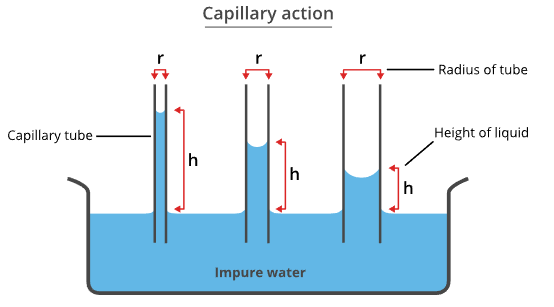
The process by which kerosene rises up the wick in a lantern is
evaporation
conduction
diffusion
capillarity
14.
When an object moves from rough surface onto a smooth one with the same energy, its speed
increases
decreases
remains the same
becomes zero
15.
Insects can walk on the surface of water because of
diffusion
capillarity
viscosity
friction
16.
The force which is able to hold light objects on the surface of liquids is called
surface tension
friction
capillarity
viscosity
17.
The weight of an object is the
force with which the sun pulls it
force with which the moon pulls it
force of the object when gravity is not acting on it
force with which gravity acts on it
18.
Which of the following forces will cause an object to move in a circular path?
Centripetal force
Gravitational force
Inertial force
Reaction force
19.
A plastic pen on rubbing in the hair attracts pieces of paper. What force is responsible for the attraction?
Electrostatic force
Frictional force
Gravitational force
Magnetic force
20.
The property of water that causes mosquito larvae to float on it is
density.
viscosity.
surface tension.
volume.
21.
Which of the following statements about a force are true?
I. It causes moving objects to stop
II. It causes stationary objects to move
III. It can change the direction of motion
IV. It can change the shape of an object
I and II only
III and IV only
I, II and III only
I, II, III and IV
22.
The force which opposes the motion of one object on another object is known as
friction.
gravity.
tension.
weight.
23.
A boy stepped on a banana peel on the ground and fell because the
boy was not wearing shoes.
ground was too hard.
banana peel reduced the friction on the ground.
banana peel increasethe friction on the ground.
24.
Kerosene is able to reach the other end of a wick by
diffusion.
suction pressure.
capillary action.
osmosis.
25.
The force, which opposes the motion of one body on another body is called
adhesion.
cohesion.
friction.
tension.
26.
When a person jumps up, he/she is able to come down because of the
pull of the earth's gravitational force.
pull of the earth's magnetic force.
resistance of the earth's atmosphere to the upward motion.
pressure of the earth's atmosphere on the person.
27.
The process by which kerosene rises up to the wick of a lantern is known as
capillarity.
diffusion.
surface tension.
osmosis.
28.
Which of the following statements about friction is not true?
It wears off materials
It produces heat
It opposes motion
It increases speed
29.
The force that opposes the motion of an object on another object is called
electrical force.
frictional force.
gravitational force.
magnetic force.
30.
Water is prevented from passing through tiny holes in an umbrella by
diffusion.
frictional force.
capillarity.
surface tension.
31.
Weight is an example of
energy.
force.
work.
power.
32.
The force that binds molecules of the same substances together is called
adhesion.
cohesion.
capillary action.
surface tension.
33.
Capillary action is applied in the following activities except
blotting an ink with a blotting paper.
absorption of water with a towel.
rising of water in a very narrow glass tube.
sticking of water droplets on the surface of a glass tube.
34.
The force of attraction between molecules of different substances is called
adhesion.
cohesion.
tension.
viscosity.
35.
Some insects are able to walk on water because
they are lighter than water.
their skins cannot be penetrated by water.
the surface of the water acts like an elastic skin.
the surface of water is curved.
36.
The force which pulls all objects towards the centre of the earth is the
frictional force.
electrostatic force.
gravitational force.
rotational force.
37.
Which of the following devices work(s) on the principle of transmission pressure in fluids?
I. Water pumps
II. Syringes
III. Bicycle brakes
I only
I and II only
II and III only
I, II and III
38.
One advantage of friction is that it
enables cutting tools to be sharpened.
increases the efficiency of machines.
produces a lot of heat in machines.
wears off the sole of shoes.
39.
Which of the following statements about a force are correct? It
I. is measured in newtons.
II. is measured in newton-metre.
III. can start a motion.
IV. can change the direction of a moving body.
I and II only
I and III only
I, III and IV only
I, II, III and IV
40.
Kerosene is poured on the surface of a pond in order to
make it unsafe for human consumption
make it safe for animal consumption
increase the surface tension
break the surface tension
41.
The pressure in fluids
acts differently in all directions
acts upwards at any point
decreases with depth
increases with depth
42.
The pressure in fluids
increase with depth.
decrease with depth.
acts upwards at any point.
acts differently in all directions.
43.
Which of the following statements about a force are correct? It
I. is measured in newtons.
II. is measured in newton-metre.
III. can start a motion.
IV. can change the direction of a moving body.
I and II only
I and III only
I, III and IV only
I, II, III and IV
44.
Kerosine is able to reach the other end of a wick by
diffusion.
suction pressure.
capillary action.
osmosis.
45.
Which of the following statement(s) about pressure in fluids is/are correct? Pressure
I. decreases with depth
II. increases with depth
III. does not depend on the area
I only
II only
I and II only
II and III only
46.
The force that results when a comb is rubbed through dry hair is
magnetic force.
frictional force.
gravitational force.
electrostatic force.
47.
The force that opposes motion is
magnetic force.
frictional force.
gravitational force.
electrostatic force.


Digital Address: GZ-033-0057
King Kotey Road
Teshie - Accra
Ghana
+233 54 753 9118
info@kuulchat.com

© Copyright 2015 - 2026
All Rights Reserved