
Finwaver.com
Your school or business runs better on finwaver.com. Sign up for free one (1) week try.
(i)
What is germination of seed?
(ii)
State two conditions necessary for the germination of seed.
i)
What is a fruit?
ii)
State two differences between a fruit and a seed.
Explain why on an island where there are no insects and birds, the pawpaw plant produces only flowers but no fruits
(i)
What is the importance of seed dispersal?
(ii)
Name two types of fruits and state their mode of dispersal.
(a)
Define
(i)
self-pollination
(ii)
cross-pollination
(b)
State two ways in which cross-pollinated plants are better than self-pollinated plants.
(i)
Explain vegetative reproduction
(ii)
State two differences between sexual reproduction and vegetative reproduction.
(iii)
Give one advantage of vegetative reproduction.
i)
List four parts of a plant that are used for asexual reproduction.
ii)
Give two reasons why sexual reproduction is more advantageous than asexual reproduction.
i)
Distinguish between a rhizome and a stem tuber.
ii)
Give one example each of a rhizome and a stem tuber.
Name the two processes that lead to the formation of seeds in a flowering plant.
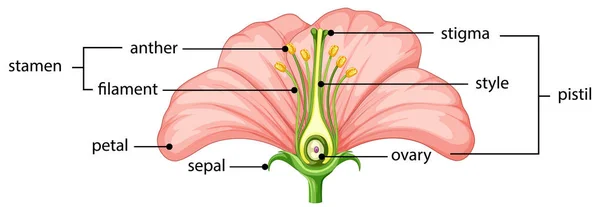
Name the four main parts of a flower.
Give two external features of plants pollinated by wind.
Mention two functions of each of the following parts of a plant:
i)
leaves
ii)
roots
a)
State
i)
three characteristics of roots.
ii)
two functions of roots.
b)
State two conditions necessary for the germination of seeds
State three characteristics each of
i)
an insect pollinated flower
ii)
a wind pollinated flower
(i)
What is vegetative reproduction?
(ii)
Name two plants which reproduce vegetatively
(i)
Give one example each of a rhizome, a corm, a stem tuber, a bulb and a sucker.
(ii)
State two reasons why a rhizome, a corm and a stem tuber are considered as stems.
Define pollination.
Give two agents of pollination.
Which part of the following crops does a farmer usually grow?
Banana, cocoyam, tomato, ginger, yam, cassava
State the function of the brightly coloured petals in insect pollination
List separately the vegetative parts and reproductive parts of a flowering plant
(i)
Name the process by which green plants manufacture their food.
(ii)
State three factors necessary for this process to take place.
(i)
Draw a well labeled diagram of a flower
(ii)
Of what importance is the flower to the plant?
A student was tasked to prepare a raised nursery bed for nursing tomato seeds:
(i)
Suggest two simple tools that could be used in the nursery bed preparation;
(ii)
State one function each of the tools listed in (d(i).
Outline briefly the steps involved in preparing raised beds.
(i)
State what happens when photosynthesis occurs in a leaf.
(ii)
What is pollination?
Name four stages in the cycle of a flowering plant.
i)
What is dispersal of seed?
ii)
State two characteristics of seeds dispersed by wind.
(a)
Distinguish between sexual reproduction and asexual reproduction.
(b)
State the vegetative part that can be used to propagate each of the following plants:
(i)
cassava
(ii)
onion
(iii)
banana
(iv)
yam
(v)
ginger
(vi)
pineapple
(i)
What is the difference between self-pollination and cross-pollination?
(ii)
Name two agents of cross-pollination.


Digital Address: GZ-033-0057
King Kotey Road
Teshie - Accra
Ghana
+233 54 753 9118
info@kuulchat.com

© Copyright 2015 - 2026
All Rights Reserved