
Finwaver.com
Your school or business runs better on finwaver.com. Sign up for free one (1) week try.
(i)
What is refraction of light?
(ii)
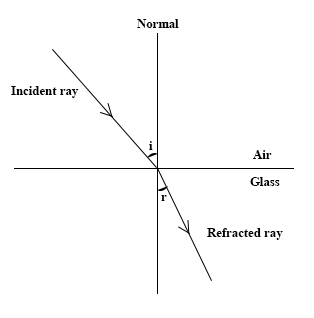
Sketch a diagram to show the path of a light ray when it travels from air to glass.
Name two sources each of
(i)
natural light;
(ii)
artificial light.
i)
What is reflection of light?
ii)
State two characteristics of the images formed by plane mirrors.
(i)
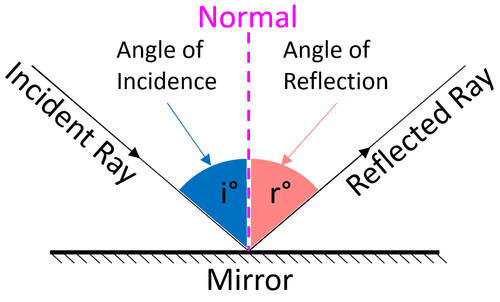
State the laws of reflection
(ii)
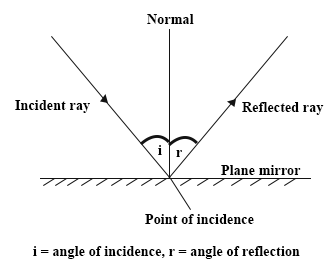
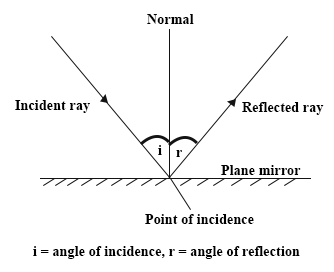
Draw a labelled diagram to show the reflection of light on a plane mirror
A certain pupil in a classroom can see clearly on the blackboard only when he sits at the front.
(i)
State the eye defect the child is suffering from.
(ii)
Explain why the child is unable to see when he is far from the blackboard.
(iii)
How can the defect be corrected?
(i)
State the difference between an opaque object and a translucent object
(ii)
Give one example each of an opaque and a translucent material.
(i)
State the laws of reflection.
(ii)
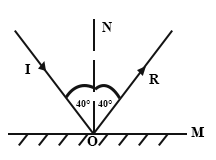
Draw a ray diagram of light incident at an angle of 40o on the surface of a plane mirror.
i)
What is dispersion of light?
ii)
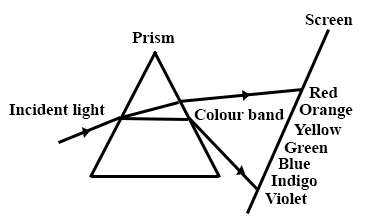
Draw and label a diagram of dispersion of light through a triangular glass prism.
i)
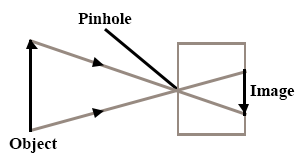
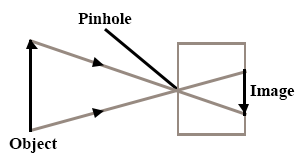
Draw and label a diagram to show how an image is formed in a pinhole camera.
ii)
State the characteristics of the image formed.
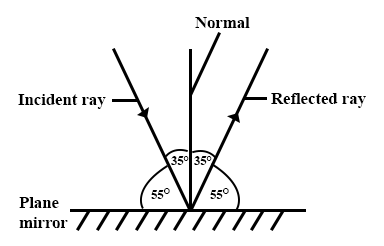
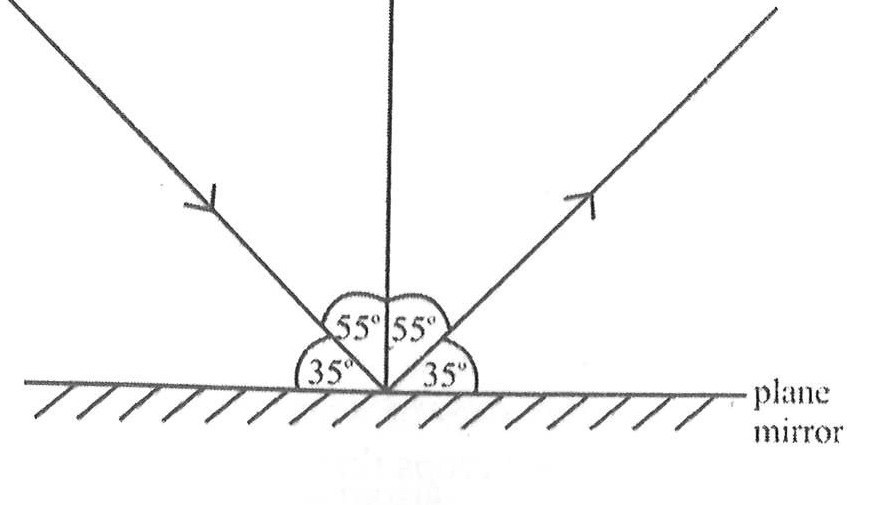
A ray of light hits the surface of a plane mirror at an angle of 55°.
i)
Draw a ray diagram showing the normal, incident ray and the reflected ray.
ii)
What is the angle of reflection for the ray?
State two properties of the image formed in a plane mirror.
i)
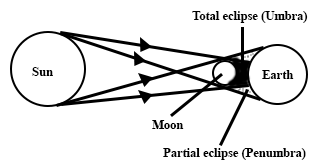
What is meant by eclipse of the sun?
ii)
With the aid of a labelled diagram, distinguish between total eclipse and partial eclipse.
Draw and label a diagram to show how the eclipse of the sun is formed.
(i)
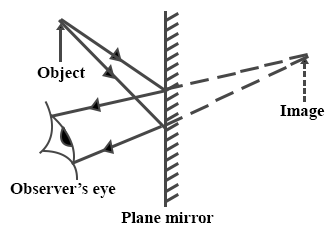
An object is placed in front of a plane mirror. Draw a ray diagram to show how the image of the object is formed.
(ii)
State two characteristics of an image formed by a plane mirror.
(a)
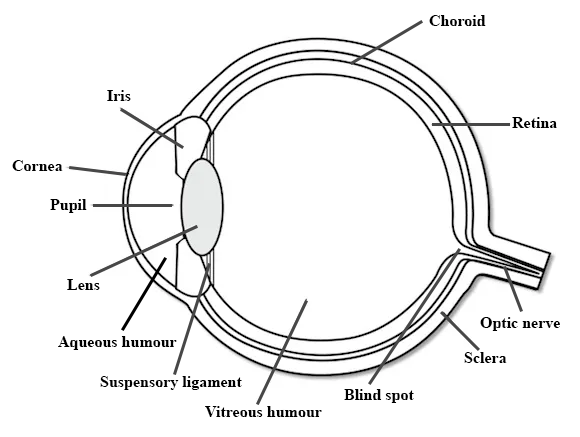
Make a labelled diagram of the human eye
(b)
(i)
Name two defects of the eye.
(ii)
State how each of the defects you have named above can be corrected.
State one difference between the eclipse of the sun and the eclipse of the moon.
An object is placed in front of a pinhole camera as shown in the diagram below:
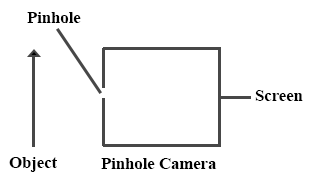
Draw in your answer book a ray diagram (not to scale) to show how the image is formed on the screen of the camera.
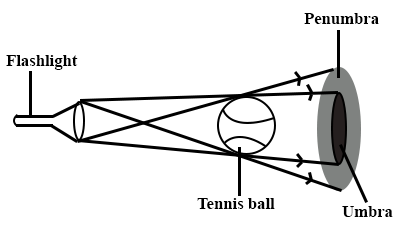
Given a flashlight, a tennis ball and a screen, draw a diagram to show how a shadow can be formed.
(i)
Explain briefly why an eclipse occurs.
(ii)
Name the two types of eclipse
A ray of light strikes the surface of a plane mirror at an oblique angle.
Draw a ray diagram to show each of the following:
(i)
the normal
(ii)
the incident ray
(iii)
the reflected ray
(iv)
the angle of incidence
(v)
the angle of reflection
Give one property of the image formed by a plane mirror.
(i)
Mention two main defects of the human eye
(ii)
How are these defects corrected in each case?
The diagram below is an illustration of the picture obtained on a screen when an opaque object is placed in the in the path of a light source.
Study the diagram carefully and answer the questions that follow.

i)
Name each of the shadows that is cast on the screen:
α)
A;
β)
B.
ii)
What does the shadow of the object cast on the screen illustrate?
Draw and label a diagram of a ray of light which makes an angle of 350 with the surface of a plane mirror.


Digital Address: GZ-033-0057
King Kotey Road
Teshie - Accra
Ghana
+233 54 753 9118
info@kuulchat.com

© Copyright 2015 - 2026
All Rights Reserved