1.
A herbal mixture has a volume of 200 m3 and a mass of 10,000 kg. Determine the density of the mixture.
50 kg m-3
200 kg m-3
800 kg m-3
10,200 kg m-3
2.
The following products, X,Y,Z and W have masses 0.05 kg, 50 mg, 500 g and 0.05 g respectively.
Use this information to answer the question below.
If all the products have equal volumes, which of the product (s) would have the highest density?
X
Y
Z
W and X
3.
The following products, X,Y,Z and W have masses 0.05 kg, 50 mg, 500 g and 0.05 g respectively.
Use this information to answer the question below.
Which of the products have the same mass?
Y and W
X and Y
Y and Z
X and W
4.
The SI unit that is derived is
kg.
k.
Pa.
s.
5.
The floor of a room has length 20 m and breadth 15 m. Determine the area of the floor.
35 m2
200 m2
250 m2
300 m2
6.
Which of the following instruments can be used to measure the diameter of a circle?
A metre-rule
A thermometer
An ammeter
A string
7.
An example of a derived quantity is
length
mass
temperature
volume
8.
A student is to measure 20 cm3 of a sodium hydroxide solution. What instrument could be used?
Measuring tape
Hygrometer
Measuring cylinder
Hydrometer
9.
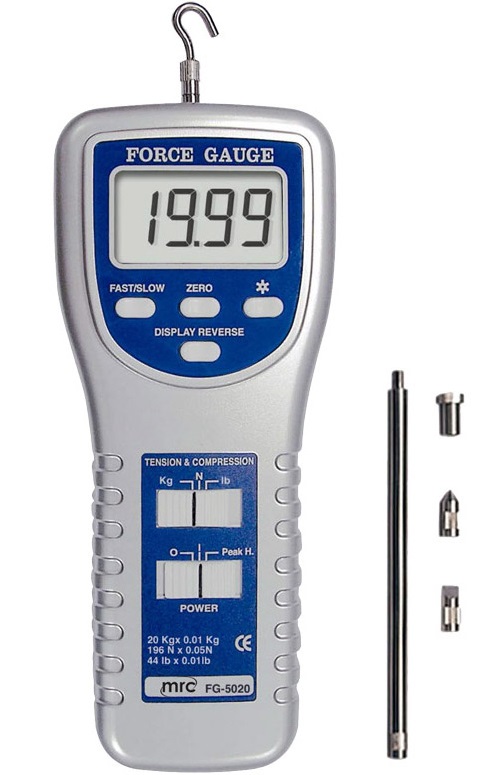
A force meter measures
mass.
temperature.
weight.
work.
10.
The floor of a room has length 20 m and breadth 15 m. Determine the area of the floor.
35 m2
200 m2
250 m2
300 m2
11.
Which of the following instruments can be used to measure the diameter of a circle?
A metre-rule
A thermometer
An ammeter
A string
12.
An aluminium cube of side 2 m has a mass 24 kg. Determine the density of the aluminium.
3 kg m-3
12 kg m-3
24 kg m-3
48 kg m-3
13.
The instrument that can be used to measure accurately the mass of a substance is
bean balance.
spring balance.
eureka can.
measuring cylinder.
14.
What is the average body temperature of a healthy person?
25°C
36°C
37°C
38°C
15.
Which of the following is equal to one metre?
1 cm
10 cm
100 cm
500 cm
16.
A piece of stone sinks in water because
its density is the same as that of water
it is able to displace its own weight of water
its density is less than that of water
its density is greater than that of water
17.
What is the difference between mass and weight? The
mass of a body is twice the weight
weight of a body is constant but its mass varies
mass of a body varies but its weight does not
weight of a body varies but its mass does not
18.
Ice floats on water because
water is denser than ice
ice is denser than water
ice has the same temperature as water
ice has a lower temperature than water
19.
A stone with mass 80.0 g was put into a measuring cylinder containing water. If the water level rises by 20.0 cm, calculate the density of the stone.
0.25 g cm-3
1.20 g cm-3
1.80 g cm-3
3.30 g cm-3
20.
21.
One hectare is equivalent to
100 m2
1,000 m2
10,000 m2
100,000 m2
22.
The density of a substance is 2.5 gcm-3. Calculate the volume of the substance if its mass is 25.0 g.
0.1 cm3
10.0 cm3
22.5 cm3
27.5 cm3
23.
Ice is able to float on water because the ice is
colder than water.
denser than water.
has a greater mass for the same volume of water.
has a greater volume for the same mass of water.
24.
The unit of measurement of energy is
joule.
kelvin.
newton.
watt.
25.
The volume of a metal ball was determined by dropping it into a measuring cylinder containing 20 cm3 of water and the water level rose to 35 cm3. If the mass of the ball is 35 g, calculate its density.
1.0 g cm-3
1.6 g cm-3
1.8 g cm-3
2.3 g cm-3
26.
A metal displaces 5.0 cm3 of water when completely immersed in water. If the mass of the metal is 35.0 g, calculate its density.
7.0 g cm-3
30.0 g cm-3
40.0 g cm-3
175.0 g cm-3
27.
A substance of mass 10 kg has a density of 2.0 kgm-3. Calculate its volume.
0.2 m3
5.0 m3
10.0 m3
20.0 m3
28.
The instrument used to measure temperature is the
ammeter.
barometer.
manometer.
thermometer.
29.
An aluminium cube with side measuring 2 m has a mass of 24 kg. Calculate the density of the aluminium.
48 kgm-1
24 kgm-1
12 kgm-1
3 kgm-1
30.
A metre rule can be used for measuring the
volume of a liquid.
area of a ball.
length of a table.
diameter of a wire.
31.
A metal block has a mass of 0.1kg. Calculate its volume if the density is 1.0 kgm-3.
0.01 m3
0.10 m3
1.00 m3
10.00 m3
32.
A suitable instrument that could be used to measure the internal diameter of a bamboo flute is
beam balance.
metre fule.
surveyor's tape.
vernier callipers.
33.
Which of the following statements explain(s) why an object floats in water? A floating object
I. is less dense than water
II. is denser than water
III. has the same density as water
I only
II only
III only
I and III only
34.
The S.I unit for measuring the work done by a force is
J.
K.
N.
W.
35.
An example of a derived quantity is
length
mass
temperature
volume
36.
The change in the volume of water when a piece of stone is dropped into it is equal to the
density of the stone.
mass of the stone.
volume of the stone.
weight of the stone.
37.
An example of a derived quantity is
length.
mass.
time.
velocity.
38.
The joule is the S.I unit for
energy.
force.
power.
pressure
39.
The S.I unit for density is
ms-1
ms-2
kg m-3
m3kg-1
40.
The mole is the S.I unit of
amount of substance.
luminous intensity.
temperature.
mass of substance.
41.
A cylinder metal has radius 7 cm and height 2 cm. Determine the volume of the cylinder.
[Take π = ]
44 cm3
107 cm3
308 cm3
1078 cm3
42.
A metal displaces 5.0 cm3 of water when it is totally immersed. If the mass of the metal is 35.0g, calculate its density.
7.0 g cm-3
30.00 g cm-3
40.00 g cm-3
175.00 g cm-3
43.
A metal block has a mass of 1.0 kg. What is the volume of the block if its density is 10 kg m-3?
0.01 m3
0.10 m3
1.00 m3
10.00 3
44.
A stone displaced 20 cm3 of water when immersed in the water. If the mass of the stone is 40 g. find the density of the stone
60 g cm-3
40 g cm-3
2 g cm-3
0.5 g cm-3


Digital Address: GZ-033-0057
King Kotey Road
Teshie - Accra
Ghana
+233 54 753 9118
info@kuulchat.com

© Copyright 2015 - 2026
All Rights Reserved