
Finwaver.com
Your school or business runs better on finwaver.com. Sign up for free one (1) week try.
(i)
Explain briefly the term earthing as used in household wiring.
(ii)
Name two sources of electric power generation.
(i)
State ohm's law
(ii)
A resistor has a resistance of 12.5 Ω. If a current of 10 A passes through the resistor, calculate the potential difference across the resistor.
(i)
Explain briefly how static electricity is produced.
(ii)
Name two other sources of electric power generation apart from hydro and thermal.
A 100 W heater is connected to a 240 V mains supply. Calculate the:
(i)
current drawn;
(ii)
resistance of the heater.
Give the reason for using each of the following devices in household wiring:
(α)
earthing;
(β)
stabilizer;
(γ)
fuse.
An electrical appliance rated 1.5 kW, 240V is left running for 2 hours.
Calculate the
(i)
current drawn;
(ii)
electrical energy consumed.
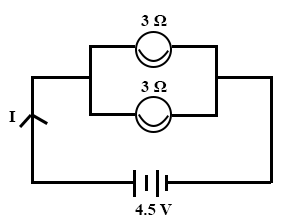
Two lamps, each of resistance 3 Ω, are connected in parallel. The arrangement is then connected across a 4.5 V battery.
(i)
Draw a circuit diagram for the arrangement.
(ii)
Calculate the effective resistance of the lamps.
(iii)
Calculate the total current in the circuit.
(i)
Define resistance of a conductor.
(ii)
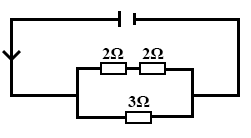
Calculate the effective resistance in the circuit.
What is an electrical conductor?
Two lamps of resistances 3Ω and 5Ω are connected in parallel to a 6V source. Calculate the value of the current supplied by the source.
State three advantages that parallel electrical wiring has over series electrical wiring in a household.
An immersion heater is rated 220 V, 850 W. Determine the current flowing through the heater.


Digital Address: GZ-033-0057
King Kotey Road
Teshie - Accra
Ghana
+233 54 753 9118
info@kuulchat.com

© Copyright 2015 - 2026
All Rights Reserved